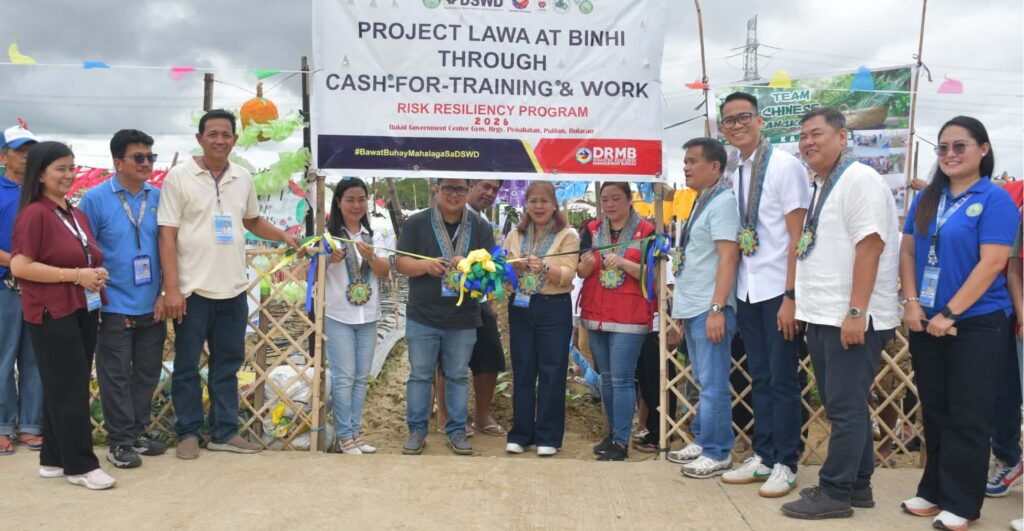
CITY OF MALOLOS – Reinforcing its commitment to climate resilience and sustainable community development, the Provincial Government of Bulacan (PGB), under the leadership of Governor Daniel R. Fernando, championed the implementation of Project Local Adaptation to Water Access (LAWA) and Breaking Insufficiency through Nutritious Harvest for the Impoverished (BINHI), on June 2.
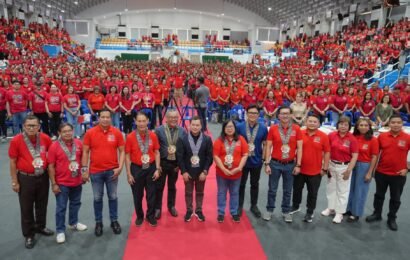
Serving as the vital strategic bridge, the PGB, through the Provincial Social Welfare and Development Office (PSWDO), seamlessly linked the Department of Social Welfare and Development (DSWD) Central Office with local government units (LGUs) to ensure that national resources were efficiently and precisely downloaded to the grassroots level during the project’s Sustainability Training and Turnover Ceremony held at the Bukid Government Center Gym in Brgy. Peñabatan, Pulilan, Bulacan.
The beneficiaries of this flagship initiative were selected based on assessments by the DSWD Central Office, which identified 19 municipalities and cities in Bulacan as the most severely affected by the El Niño phenomenon. Primarily, the targeted participants were drawn from vulnerable households engaged in farming, fishing, or informal employment, with structural priority given to Indigenous Peoples, women, persons with disabilities, solo parents, and senior citizens.
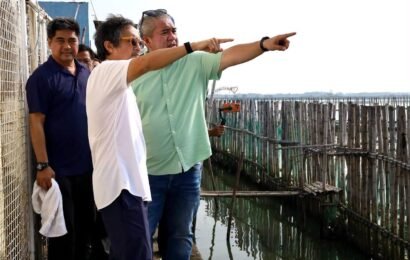
Under the implementation framework managed by the PSWDO across the LGUs, 300 selected participants underwent comprehensive Cash-for-Training and Work (CFT/W) activities designed to build long-term community resilience. Over a 20-day intensive period, these participants engaged in vital water access and nutritional security projects, transforming climate vulnerabilities into sustainable community assets.
In recognition of their active participation and labor, each of the 300 participants received a total payout of ₱11,400 calculated based on the daily minimum wage of ₱570 multiplied by the 20 days of training and community work, providing immediate economic relief to families affected by climate harshness.
PSWDO Department Head Rowena J. Tiongson emphasized the province’s active role in managing the program’s execution and its forward-looking vision to bridge more opportunities for Bulakenyos.
“Kasalukuyan nating tinututukan ang pamamahagi ng payout para sa ating mga benepisyaryo. Higit pa rito, pangmatagalang layunin din ng Pamahalaang Panlalawigan na mas palakasin pa ang programang ito sa pamamagitan ng pagpapalawak nito upang mas marami pa tayong kababayan ang maisama at matulungan,” Tiongson said.
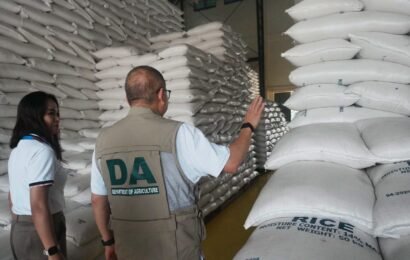
Moreover, Rice Crop Manager Rodolfo De Guzman from the DA expressed the Pledge of Commitment of the beneficiaries to collectively continue to nurture, develop, and sustain projects entrusted to them under the Project LAWA at BINHI.
The formal turnover of interventions and support packages to the beneficiaries of the project was also conducted during the program.
Through the proactive intervention of the PSWDO, the PGB continues to solidify its role as an indispensable conduit for national-to-local governance, ensuring that climate adaptation frameworks translate into tangible, inclusive development for the entire province.