
Borrowers, depositors, and digital payment users would be guaranteed relief from fees, penalties, and loan obligations during national emergencies, according to Senator Joel Villanueva who recently filed a bill that transforms the BSP’s crisis-response posture from one of persuasion to enforcement.
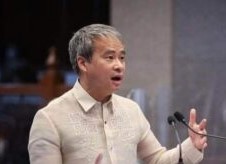
Villanueva, chair of the Senate Committee on Banks, filed Senate Bill No. 2121, the Emergency Financial Stability and Consumer Protection Act, addressing squarely at a problem Filipinos felt at the recent energy emergency. When a crisis hits, the Bangko Sentral ng Pilipinas (BSP) is expected to protect the public, but the law has never given it the power to make banks follow through.
“The BSP’s job is to keep the financial system stable and protect the Filipino public, especially during a crisis. But we cannot ask the BSP to do its job and then leave it without the tools to do so,” Villanueva said in a statement. “This bill gives the BSP the authority it needs to act and to enforce.”
When the COVID-19 pandemic struck, the BSP issued relief guidance encouraging banks to provide payment accommodations and waive certain fees. While some financial institutions complied, many banks did not as the central bank had no legal basis to compel them.
The same gap resurfaced last month, when the BSP authorized financial institutions to extend support during the State of National Energy Emergency, yet remained unable to mandate uniform implementation.
“Voluntary compliance is not good enough when Filipinos are struggling to keep the lights on, pay their loans, and put food on the table,” Villanueva said. “The public deserves a guarantee, not a request.”
Under the bill, once a national emergency is declared and the BSP’s Monetary Board determines that extraordinary regulatory intervention is necessary, the central bank may issue mandatory directives to all BSP-supervised financial institutions—covering banks, quasi-banks, electronic money issuers, payment system operators, and all other entities under its regulatory authority.
Those directives may require mandatory grace periods, payment deferrals, loan restructuring accommodations, and other consumer assistance programs, according to the bill. The BSP may also suspend or waive fees on electronic payment channels, including InstaPay and PESONet, and impose temporary limits on financial transactions where necessary to preserve systemic stability.
The bill also requires the BSP to ensure that any emergency measure is reasonable, targeted, and time-bound, while taking into account its possible effects on the operations, financial stability, and sustainability of banks, payment system operators, and other regulated institutions, as well as the potential impact on consumers and the broader financial system.
The bill includes safeguards against overreach. No directive may remain in force beyond 180 days after the termination of the declared emergency unless extended by law. All measures must be temporary, proportionate, and strictly necessary, and may not permanently impair vested rights or contractual obligations beyond what the emergency requires.
Financial institutions that comply in good faith are shielded from civil, administrative, or criminal liability arising solely from that compliance, absent fraud, gross negligence, or willful misconduct. Non-compliant institutions face enforcement action under existing banking laws, including administrative fines, cease-and-desist orders, and suspension of responsible directors and officers.
The bill also requires BSP to submit a report to Congress within 60 days of each emergency’s termination, covering measures implemented, their economic and financial impact, enforcement actions taken, and recommendations for future crisis preparedness.
“When the next crisis comes—and it will come—the BSP should not have to beg. It should be ready to act, and Filipinos should know that relief from their bank is on the way,” Villanueva said.