In tropical countries like the Philippines, sunlight is abundant almost all year. It’s what makes solar energy such a powerful opportunity for clean electricity. But what happens to the land beneath all those solar panels?
With intense heat and heavy rains common in the tropics, open land can quickly dry out, harden, or erode. Left unmanaged, soil can wash away into rivers and communities during strong downpours. That’s why modern solar farms are designed not just to generate power—but also to protect the land they sit on.
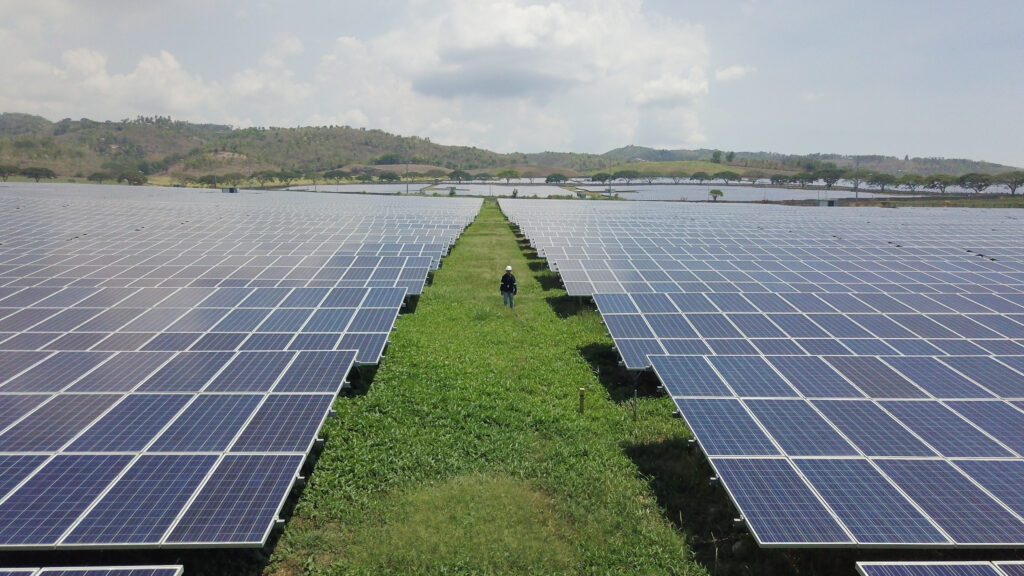
Under and around solar panels, grass plays a quiet but important role.
“Grass under the panels still gets some sunlight from the sides, which is enough for photosynthesis,” explained Cris Vincent Alidon, Vice President for Engineering and Execution at Aboitiz Renewables, Inc. Panels are spaced to allow morning and afternoon light in, while providing shade at noon when the sun is strongest. The result is a cooler microclimate where vegetation can thrive.
The benefits go both ways. Healthy grass stabilizes the soil, slows down rainwater, and reduces runoff—lowering the risk of flash floods or landslides. In turn, the cooler ground temperature can also help solar panels operate more efficiently.
Engineers also plant stronger grasses along the edges of panels where rainwater naturally drips. These act like natural barriers, slowing water flow and preventing soil erosion. It’s a simple but effective solution that protects nearby waterways and communities.
Solar farms that are planned well help grass grow, keep soil safe, and handle rainwater,” said Leo Lungay, Vice President and General Manager for Solar and Wind at Aboitiz Renewables. “Clean energy and caring for nature can work well together, helping both people and the environment.”
In places where sun and rain are both abundant, solar farms are proving that renewable energy doesn’t have to come at the expense of the land. With thoughtful design and respect for local ecosystems, they can generate electricity while nurturing the ground beneath them.
Sometimes, the future of energy isn’t just about what’s above the panels — but what’s growing below them.