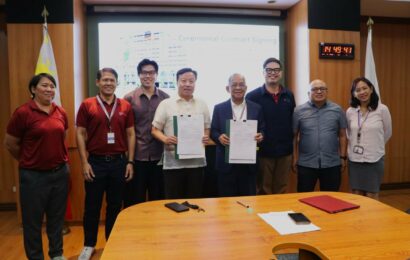

FIRST DISTRICT, Pampanga – Congressman Carmelo “Pogi” Lazatin, Jr. expressed his gratitude to the Sangguniang Panlungsod of Angeles City on March 16, 2026 for their passage of Resolutions No. 12234, No. 12235, and No. 12236, Series of 2026, expressing support for Lazatin’s proposed House Bill No. 5125 (Establishment of National and Provincial Centers for Autism Act), HB No. 2422 (Bale Pusu Home for the Elderly in All Cities and Municipalities Act), and HB No. 7290 (Amending R.A. 7277 for Additional Privileges to Persons with Disability).
Resolution No. 12234 was introduced by Councilor Aaron Pineda, while Resolutions No. 12235 and 12236 were introduced by Councilor Arvin Suller, during the 7thRegular Session of the 20th Sangguniang Panlungsod on February 24, 2026.
Copies of the resolutions were forwarded to Lazatin’s office on March 4, 2026.
“Nagpapasalamat ako sa Sangguniang Panlungsod ng Angeles City, lalo na sa mga naging dati kong kasamahan, sa kanilang suporta sa aking mga inihaing batas,” Lazatin said.
Lazatin served as Angeles City Councilor for six years, before being elected as City Mayor in 2019.
On October 6, 2025, Lazatin filed HB 5125, which mandates the establishment of National and Provincial Centers for Autism that will formulate and implement an integrated and comprehensive plan for the diagnosis, therapy, and rehabilitation of individuals with autism.
HB 2422, which mandates the establishment of at least one ‘Bale Pusu’ home for the elderly in all cities and municipalities in the country – prioritizing elderly citizens who have been abandoned, left on the streets, or have no families or kin to take care of them – was filed on July 29, 2025.
Meanwhile, HB 7290, filed on January 26, 2026, seeks to grant additional privileges to Persons with Disability (PWDs) through the amendment of Republic Act No. 7277, otherwise known as the “Magna Carta for Persons with Disability.”
Among the amendments proposed through HB 7290 is the provision of free assistive technology services, such as wheelchairs and walkers; prostheses; hearing aids; aids for the visually impaired and specialized computer software; and hardware and peripherals that increase mobility, hearing, vision, or communication capacities.