
Senator Joel Villanueva has filed a bill seeking to give part-time workers the same labor rights and benefits enjoyed by their full-time counterparts, arguing that the Labor Code has no framework governing an arrangement that has become increasingly common in the workplace.
Villanueva, chair of the Senate Committee on Labor, Employment and Human Resources Development, Senate Bill No. 2375, or the proposed Part-Time Employment Act, seeks to insert a new provision into the Labor Code to define part-time work and ensure protection of the rights and welfare of workers under this arrangement.
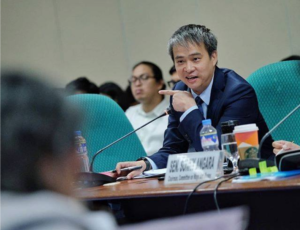
“An express legal framework on part-time employment is necessary because the Labor Code contains no specific provisions governing part-time work, leaving its regulation largely to the Department of Labor and Employment’s 1996 Explanatory Bulletin,” Villanueva said in the bill’s explanatory note.
“At the same time, technological advancements and evolving business models have increased the demand for flexible work arrangements, while existing labor laws remain anchored on the traditional eight-hour workday,” he said.
Under the bill, part-time employees receive rights equivalent to those of comparable full-time workers: wages computed proportionately on an hourly basis but not below the minimum wage, mandatory social protections under SSS, PhilHealth and Pag-IBIG, security of tenure, statutory leave benefits, retirement pay, and the right to self-organize and bargain collectively.
Villanueva cited government data showing the scale of the problem, noting the Philippines “recorded 3.93 million underemployed workers as of December 2025 who sought additional or more suitable work.”
Villanueva said a clear statutory framework would open up employment opportunities for students, parents, senior citizens, persons with disabilities and workers with caregiving responsibilities who need flexible schedules.
The bill is also consistent with the Trabaho Para sa Bayan Plan 2025-2034, which he said identifies part-time employment legislation as a priority reform for a more inclusive and future-ready labor market.
Under the bill, “part-time employment” would cover workers whose normal hours are substantially shorter than what is standard in an establishment, or shorter than those of comparable full-time workers. The definition excludes irregular, temporary or intermittent work, as well as cases where hours have been temporarily cut for economic, technical or structural reasons.
The bill directs the Department of Labor and Employment, in consultation with the National Tripartite Industrial Peace Council and other stakeholders, to issue implementing rules within 90 days of the law’s effectivity. Agency heads who willfully or negligently fail to do so, or who issue rules contrary to the law, would face administrative penalties.