No Job should be bound by gender.
In celebration of National Women’s Month, the Association of Women Workers in the Construction Industry (AWWCI) is promoting a clear message: no job should be bound by gender.
Across the Philippines, March is marked by activities recognizing women’s contributions to nation-building and the continuing struggle for gender equality. The observance is linked to the global commemoration of International Women’s Day every March 8, rooted in early 20th-century movements for equal rights, dignity, and labor protections.
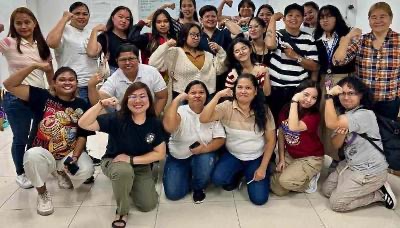
For AWWCI, the celebration goes beyond symbolism. It is an opportunity to expand women’s participation in one of the country’s most male-dominated industries. Through training programs in welding, plumbing, electrical installation, and carpentry, the organization equips women with practical skills for construction work.
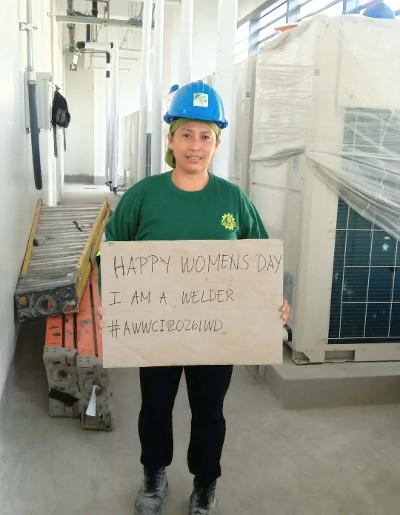
“We are encouraged by the growing number of women completing AWWCI’s training programs,” said Jane Vargas, co-founder of the organization. “Many of them are now working in construction—an industry long considered the domain of men.”
The construction sector remains a key pillar of the Philippine economy, contributing more than seven percent of the country’s gross domestic product in 2024 and generating thousands of jobs through continuing infrastructure development.
Within this expanding industry, women are steadily increasing their presence—breaking barriers and, in some cases, taking leadership roles on worksites and within organizations.
“Amid the sound of hammers and the dust of construction sites, women are emerging as a new face of the workforce—resilient, skilled, and equal partners in building the nation,” Vargas said.
AWWCI emphasized that modern construction work depends not only on physical strength but also on technical competence, discipline, teamwork, and strict adherence to safety standards—areas where women have proven capable contributors.
The group is calling on government and private construction firms to strengthen occupational health and safety policies and adopt measures that support inclusive workspaces. These include maternity protection, proper sanitation facilities, rest areas and hydration stations, personal protective equipment designed to fit women workers, and flexible work arrangements when necessary.
“Too often, the real obstacle is not women themselves but the absence of humane labor policies,” Vargas added.
One woman construction worker captured the spirit of the movement in a simple reflection: “My tools may be the extension of my hands, but my mind is the true builder.”
AWWCI is a registered non-profit organization composed of women construction workers from Metro Manila and nearby provinces. For more than two decades, it has worked to advance gender equality, women’s participation in the construction industry, and the empowerment of women workers.